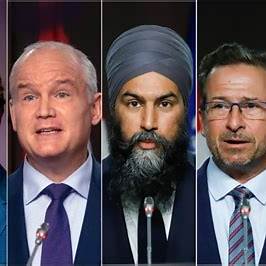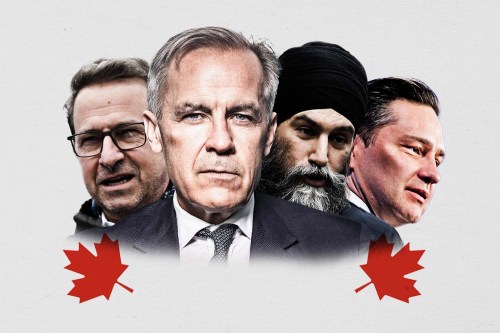


Canada is poised for a pivotal federal election on April 28, 2025, with the political landscape shaped by domestic political shifts and rising tensions with the United States. The major political parties — the Liberals, Conservatives, New Democrats, and the Bloc Québécois — each face distinct challenges and bring unique strengths to the campaign. The outcome of the election will hinge not only on the parties’ policy platforms and leadership styles but also on external forces, particularly the growing influence of U.S. President Donald Trump and his provocative trade and foreign policy positions toward Canada.
The Liberal Party of Canada
The Liberal Party of Canada enters the 2025 election under new leadership, with Mark Carney — the former Governor of both the Bank of Canada and the Bank of England — leading the charge. Carney’s reputation as a highly skilled financial steward strengthens the Liberal narrative that they are best positioned to manage the country’s economy, particularly amid economic turbulence linked to trade tensions with the United States. His financial acumen is seen as a major asset at a time when the Canadian economy faces instability due to increased U.S. tariffs and strained cross-border relations.
Carney’s campaign has focused heavily on protecting Canada’s economic sovereignty and national unity. In response to President Trump’s threats to annex parts of Canada’s northern territories for resource exploitation, Carney has framed the election as a referendum on Canadian independence and economic security. His platform emphasizes strengthening domestic industries, increasing economic self-sufficiency, and reinforcing national unity. This has resonated with voters concerned about foreign interference and the need for stable leadership.
However, Carney faces significant challenges. Despite his economic credentials, he lacks political experience, which raises questions about his ability to navigate the complexities of federal governance and parliamentary politics. The decision to call a snap election has also been met with skepticism. Critics argue that the timing limits the government’s ability to fully address the unfolding trade disputes with the United States and puts pressure on the electorate to make a rushed decision. Moreover, Carney will need to balance defending his economic policies with addressing the growing public discontent over housing affordability, healthcare accessibility, and wealth inequality — issues that have become more pronounced during the post-pandemic recovery period.
The Conservative Party of Canada
The Conservative Party of Canada, led by Pierre Poilievre, enters the election with a populist platform focused on economic growth, tax cuts, and strengthening the energy sector. Poilievre’s campaign appeals to voters frustrated with high inflation, rising taxes, and perceived government overreach. His strong criticism of the Liberal government’s handling of the economy and his call for greater self-reliance and deregulation have resonated with a significant portion of the electorate, particularly in the western provinces.
Poilievre is a seasoned politician with considerable experience in Parliament, giving him a strategic advantage in policy debates and campaign strategy. His straightforward messaging and sharp attacks on Liberal mismanagement have energized the Conservative base. However, Poilievre’s confrontational style and populist rhetoric have drawn comparisons to Donald Trump — a parallel that both helps and hurts his campaign. While some voters see him as a direct and decisive leader, others are wary of the potential for divisive politics and authoritarian tendencies.
The Trump comparison poses a significant strategic dilemma for Poilievre. Trump’s endorsement of Poilievre’s leadership and the growing ties between conservative factions in Canada and the U.S. Republican Party have raised alarms among moderate voters. Poilievre’s challenge will be to maintain the enthusiasm of his conservative base without alienating centrist voters who are wary of Trump-style politics. Additionally, he faces questions about his party’s stance on social issues, including abortion and LGBTQ+ rights, which could become flashpoints during the campaign.
The New Democratic Party (NDP)
The New Democratic Party (NDP), led by Jagmeet Singh, enters the election with a progressive platform focused on expanding healthcare, reducing income inequality, and increasing environmental protections. Singh has positioned the NDP as the party of social justice and economic fairness, appealing to younger voters and progressive Canadians disillusioned with the Liberals’ perceived centrism.
The NDP’s strengths lie in its ability to champion policies that address the social and economic challenges facing working-class Canadians. Singh’s emphasis on affordable housing, pharmacare, and climate action has resonated with voters who feel left behind by the economic recovery. However, the NDP faces significant challenges in maintaining visibility in a campaign dominated by the Liberal-Conservative rivalry. Singh’s ability to distinguish himself from Carney’s progressive messaging will be critical to retaining left-leaning voters.
The party also faces an uphill battle in terms of electoral math. Recent polling shows that the NDP’s support has stagnated, with some traditional NDP voters shifting toward the Liberals as a strategic move to block a Conservative victory. Singh will need to energize his base while appealing to undecided voters if the NDP is to increase its seat count in Parliament.
The Bloc Québécois
The Bloc Québécois, led by Yves-François Blanchet, remains focused on defending Quebec’s autonomy and promoting Quebecois cultural identity. Blanchet has framed the election as a contest over Quebec’s sovereignty and its distinct place within the Canadian federation. The Bloc’s platform emphasizes increased federal transfers to Quebec, greater control over immigration policy, and the preservation of French language rights.
The Bloc’s strength lies in its ability to mobilize nationalist sentiment within Quebec. Blanchet has successfully positioned the Bloc as the defender of Quebec’s interests, particularly amid growing concerns about federal overreach and economic instability. However, the Bloc faces a significant challenge from the Liberals’ renewed focus on national unity and sovereignty. Carney’s messaging on defending Canada’s sovereignty from Trump’s trade threats has the potential to erode the Bloc’s support base in Quebec.
Additionally, the Bloc’s regional focus limits its influence on national policy. While it can play a kingmaker role in a minority government scenario, its ability to shape national policy is restricted by its narrow geographic base. Blanchet will need to rally Quebec voters and maximize seat gains to remain a significant force in Parliament.
Key Issues to Watch
Several key issues are likely to define the outcome of the 2025 election. First and foremost is the economy. Rising inflation, housing shortages, and trade instability due to U.S. tariffs have put economic issues at the forefront of voters’ concerns. Carney’s economic expertise and Poilievre’s call for lower taxes and deregulation present two distinct paths for voters to consider.
Second, the influence of Donald Trump looms large over the election. Trump’s hostile rhetoric toward Canada, his calls for increased tariffs, and his provocative statements about Canadian sovereignty have made national unity and economic independence major campaign issues. How the parties position themselves in response to Trump’s agenda will shape voter perceptions and political alignments.
Third, the role of social policy could become a defining wedge issue. Singh’s push for expanded healthcare and environmental protections contrasts sharply with Poilievre’s more market-oriented approach. Carney’s challenge will be to balance fiscal responsibility with social investment.
Finally, the question of national identity and federalism remains central. The Bloc’s focus on Quebec sovereignty and the Liberals’ emphasis on national unity reflect the ongoing tension between regional identity and federal authority. How the parties navigate these issues will determine the broader political landscape post-election.
At Stake
Canada’s 2025 federal election presents voters with a critical choice between competing visions for the country’s future. The Liberals’ appeal to economic stability and national unity, the Conservatives’ populist call for self-reliance and deregulation, the NDP’s progressive push for social justice, and the Bloc’s defense of Quebec’s interests reflect the diverse political currents shaping Canadian society. External factors, particularly Trump’s influence and U.S.-Canada trade tensions, add further complexity to the campaign. The outcome of the election will not only determine the next government but also define Canada’s political and economic trajectory for years to come.