
In the corridors of modern history, the silencing of dissent has taken many forms. From the iron-fisted control of Hitler’s Germany and Stalin’s Soviet Union, through the anxious days of McCarthy’s America, to today’s cancel culture, one tragic motif emerges — an intolerance for opposing thought, wrapped in moral or political righteousness. Despite vast differences in time, place, and ideology, these movements share a dangerous cadence: the suppression of speech, the exaltation of belief over fact, and the ruthless destruction of reputations in the name of ideological purity.
Nazi Germany: Uniformity Through Fear
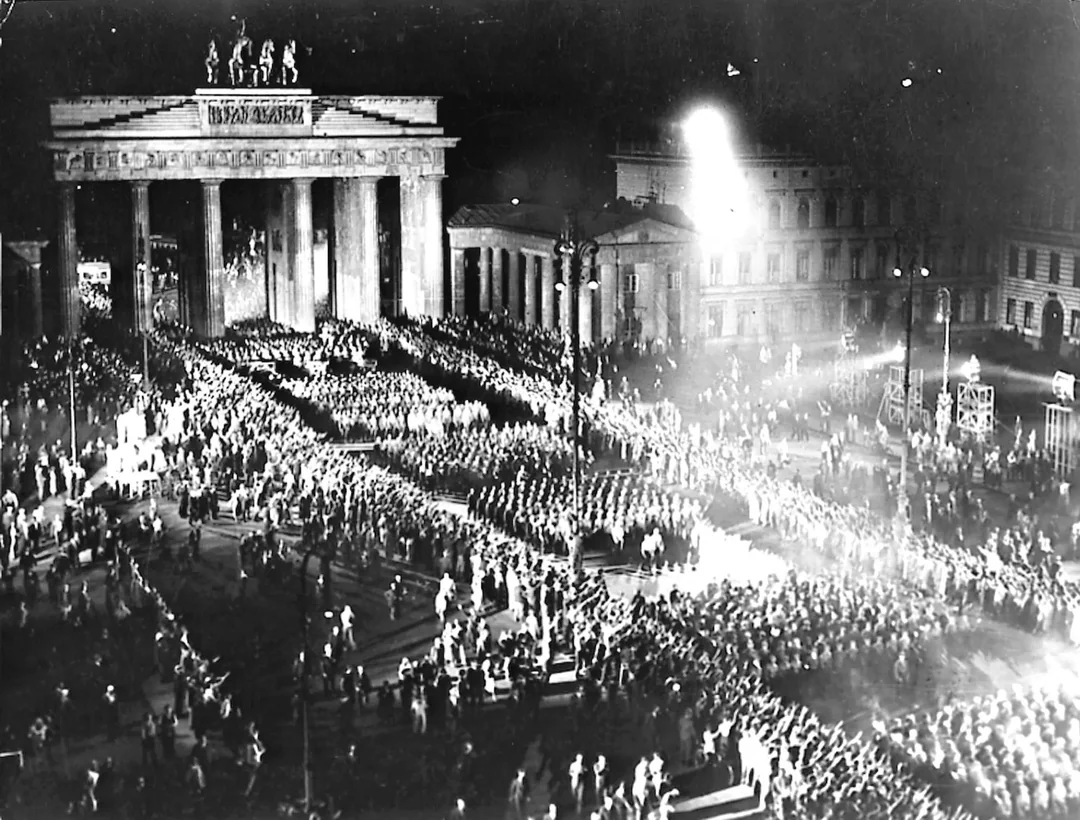
The Nazi seizure of power in 1933 was not only a political upheaval — it was an intellectual purge. Germany’s Weimar Republic, beset by humiliation from the Treaty of Versailles, economic collapse, and a deeply polarised culture, became fertile ground for Hitler’s message of unity and renewal. What followed was a systematic annihilation of dissent. The Reichstag Fire Decree and the Enabling Act of 1933 gave Hitler legal carte blanche to dissolve civil liberties “until further notice,” creating a regime where opposition was not debated, but eliminated.
Free speech ceased to exist. As historian E. Asprem notes, “Academic freedom, a free press, and the freedom of speech were not merely threatened — they were obliterated” (Far-Right Politics and the Study of Esotericism, 2025). Book burnings were not metaphors but mandates. By 1935, the Gestapo and SS ensured that even private conversations could become grounds for arrest. The totalitarian vision was clear: unity could only be achieved through fear and unquestioned loyalty.
The Soviet Union: Dissent Behind Barbed Wire
If Nazi Germany stifled speech through fascist nationalism, the Soviet Union did so through Marxist orthodoxy. From the 1930s to the 1980s, the Soviet state meticulously silenced opposition. Censorship, surveillance, and show trials created an environment where silence was safer than speech. As Richard Sharlet observed, “The dialectic of dissidence and repression created an atmosphere where fear was more effective than the bullet” (Current History, 1977).
The Glavlit, the state censorship bureau, determined what could be published, taught, or sung. The publication of samizdat (self-published, underground literature) carried the threat of imprisonment or exile. The Gulag Archipelago — both literally and in Solzhenitsyn’s telling — became the graveyard of free thought. DE Powell wrote that Soviet legal mechanisms “constituted an extreme form of censorship,” using courts and psychiatric hospitals to pathologise disagreement (Government and Opposition, 1972). Soviet physicist and dissident Andrei Sakharov’s exile served as a chilling warning to intellectuals: speak, and disappear.
McCarthyism: Patriotism as Inquisition
On the other side of the Cold War divide, Americans in the 1950s also experienced a campaign against dissent — though by a democratic government, cloaked in the rhetoric of patriotism. Senator Joseph McCarthy’s witch-hunt against alleged Communists transformed the U.S. into a theatre of paranoia. The House Un-American Activities Committee turned suspicion into condemnation, and mere association with leftist ideas could end a career.
Hollywood writers, teachers, and public servants were blacklisted without trial or evidence. Ellen Schrecker observed that “McCarthyism didn’t destroy democracy — it mutilated its soul” (Many Are the Crimes, 1998). Freedom of speech was formally intact, but informally dead; self-censorship became the price of survival.
Cancel Culture, Wokeism, and Trumpism: The New Puritans
In today’s world, free speech faces a new kind of threat — not from governments, but from online mobs and ideological absolutism. What began as a push for justice and equity — particularly within the woke movement — has sometimes morphed into a digital tribunal. A single offhand remark, taken out of context, can spark a torrent of outrage. In this climate, intent no longer matters; only the perceived offence.
On the opposite end, Trumpism similarly rejects nuance and factual accountability. Its adherents attack journalists, deny election outcomes, and label all opposition as “fake news.” Both extremes now exhibit a dangerous aversion to debate. They “shut down free speech, avoid actual discussion,” and “disassociate their views from actual facts,” as your prompt correctly observes.
This is not civil discourse — it is tribal warfare. And as in the past, the reputational damage is often irreversible. Careers vanish overnight. Apologies are dismissed as weakness. Worse still, this suppression comes not from dictators, but from peers, students, and strangers with anonymous usernames.
The path to a devastated society
Totalitarianism, in its most devastating forms, reached unmatched scales under regimes like Nazi Germany and Stalin’s Soviet Union—systems built on mass surveillance, brutal repression, and the absolute erasure of dissent. The Nazis’ genocidal ideology and Stalin’s purges resulted in the deaths of millions and must be universally condemned as horrifying reminders of unchecked power. While modern movements advocating for human rights and free speech often begin with noble intentions, there is a growing risk when these ideals are enforced through radical or intolerant means. When society begins to silence opposing voices in the name of justice or suppress inconvenient opinions to protect certain narratives, it risks adopting the very authoritarian tactics it claims to resist. The road to extremism is often paved not only by violence and hate, but also by righteousness without restraint. True freedom demands both protection from tyranny and the humility to guard against becoming tyrannical in pursuit of the good.
The Societal Cost of Silencing Dissent
When any viewpoint is deemed too dangerous to even discuss, the result is intellectual stagnation. Suppressing speech does not resolve conflict — it only pushes it underground. Without dissent, democratic society decays. Without uncomfortable questions, progress halts.
The harm is not theoretical. It is personal. A cancelled professor, a fired employee, or a censored journalist may never fully recover their standing. As in McCarthy’s era, accusation is enough. Proof is a luxury rarely afforded.
Indigenous Debate in Canada: Dialogue or Doctrine?
Canada’s reckoning with its Indigenous history has been long overdue. Yet even here, the erosion of civil conversation is cause for concern. While there is undeniable historical trauma — from residential schools to broken treaties — some voices now label any contrary opinion as “colonial violence.” Attempts to question narratives, seek forensic evidence, or scrutinise policy are sometimes met with accusations of racism or calls for criminalisation.
For instance, there have been proposals to legislate against the “denial” of claims surrounding unmarked graves or Indigenous sovereignty, even when such claims are under scholarly review. Legal scholar Bruce Pardy cautions that “Reconciliation must include open debate, not just one-sided condemnation” (National Post, 2021).
In a nation that prides itself on dialogue, it is troubling when people are afraid to speak honestly. No nation can progress when one version of history becomes immune to question.
A Return to the Middle
In The Glory and the Dream, William Manchester warned that “The centre must hold, or all is lost.” He was right. The history of repression — whether under fascism, communism, or populism — teaches us that the only safeguard against extremism is a robust, respectful exchange of ideas.
Today, we need a renaissance of rational thought. This means evidence-based debate, disagreement without demonisation, and above all, the courage to speak and to listen. We must abandon the zeal of the mob and rediscover the value of the middle ground — not as weakness, but as wisdom.
Progress is not forged in echo chambers. It is hammered out in respectful conflict, with humility and patience. The future belongs not to the loudest voices, but to the clearest ones.
Sources & Citations
- Asprem, E., & Strube, J. (2025). Far-Right Politics and the Study of Esotericism. Aries. Link
- Braune, J. (2025). I Can’t Believe I Have to Say This: Erich Fromm Was Not an Anti-“Woke” Free Speech Warrior. Springer.
- Sharlet, R. (1977). Dissent and Repression in the Soviet Union. Current History, 73(430), 112–116.
- Powell, D.E. (1972). Controlling Dissent in the Soviet Union. Government and Opposition, Cambridge University Press.
- Schrecker, E. (1998). Many Are the Crimes: McCarthyism in America. Princeton University Press.
- Pardy, B. (2021). Truth and Reconciliation Must Include Open Debate. National Post.
- Markwick, R. (2016). Censorship and Fear in the Soviet Union. Groniek. PDF
- Zuzowski, R. (1985). The Significance of Dissent in the Soviet Union. Australian Journal of International Affairs.