


In the deep corridors of power where policy is penned and fates are decided, the relationship between Canada and the United States once shimmered with quiet certainty. For over a century, these two North American siblings—born of differing revolutions but intertwined by language and landscape—had shared the longest unmilitarised border in the world and the most robust bilateral trading partnership in human history. It was not always a comfortable union, but it was enduring. Then came Trump.
Donald J. Trump did not merely upset the diplomatic table between Washington and Ottawa; he overturned it like a child denied dessert. From the moment he descended the golden escalator and launched a campaign fuelled by grievance and spectacle, Trump cast aspersions on longstanding allies—none more ironically than the nation to the north: Canada. In his mind, the arcane arithmetic of trade deficits was personal; alliances were debts, and loyalty was a commodity, not a principle.
As early as 2018, Trump initiated tariffs on Canadian steel and aluminium, citing “national security”—a rationale that even members of his own cabinet privately scoffed at. “The imposition of Section 232 tariffs on Canadian imports was not just punitive,” wrote Sutcliffe and Anderson in their 2019 study of the Canada–U.S. border. “It represented a tectonic shift in the foundational assumptions of North American economic integration” (The Canada–US Border in the 21st Century, 2019).
For Canadians—particularly those steeped in a generation of NAFTA-born integration—the psychological injury was profound. “It was as though the United States had forgotten who we were,” lamented a trade official in Bitout (2025), observing that the damage was not merely fiscal, but emotional.
Then came Mark Carney.
The Rise of Carney and a New Canadian Strategy
Mark Carney—economist, central banker, and now Prime Minister—emerged as a cool corrective to Trump’s incendiary nationalism. Where Trump brandished tariffs like a toddler with a hammer, Carney spoke in measured tones of resilience, sovereignty, and strategic diversification. Elected in a sweeping Liberal resurgence, Carney embodied a new brand of leadership—technocratic, globally literate, and fundamentally cautious of American volatility.
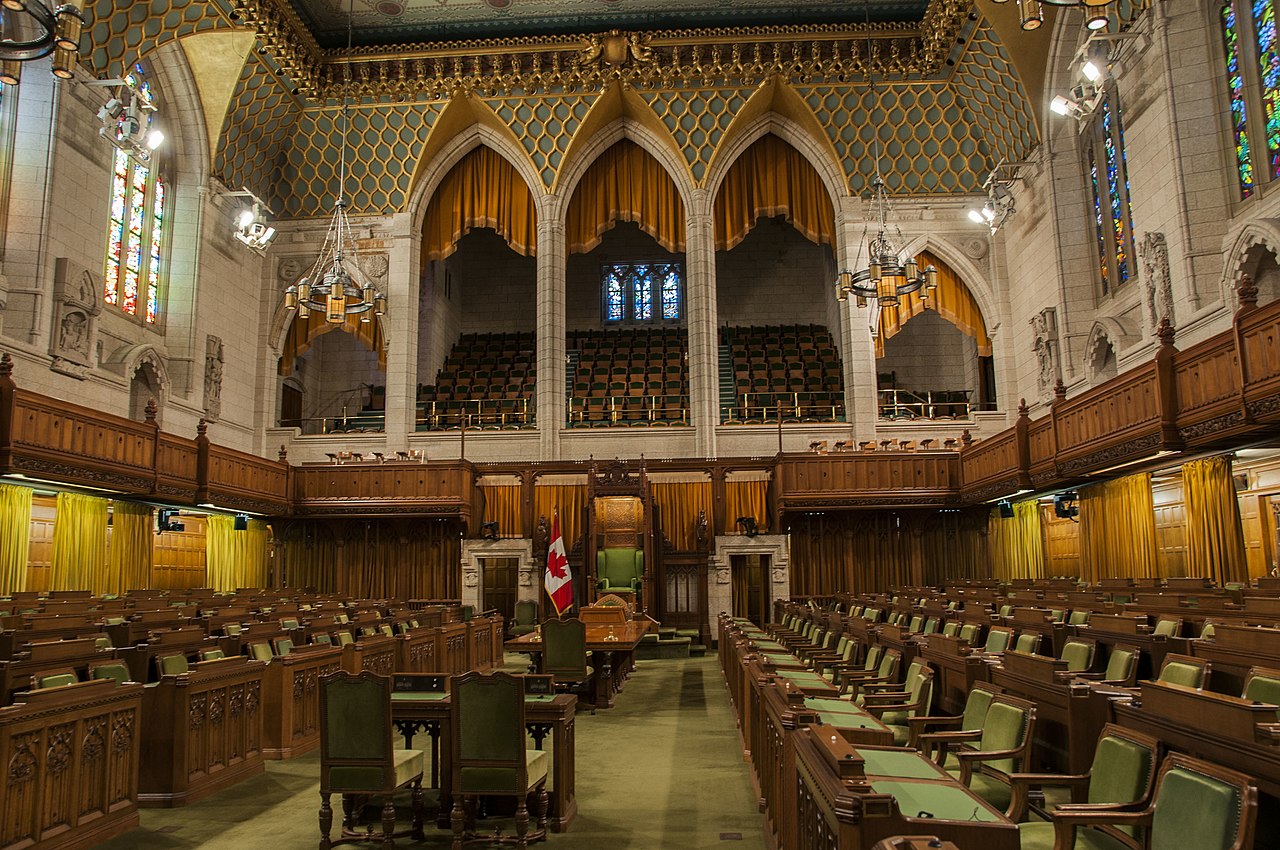
“Canada can no longer rely on a neighbour that treats friendship as leverage,” Carney declared before Parliament in early 2025. “We will build a trade architecture that reflects not just geography, but principle.” (Brown, 2025)
The Carney Doctrine
Under Carney’s guidance, Canada initiated a bold and historically unprecedented pivot—one that would redefine its economic identity in the 21st century. Drawing from his dual legacy as Governor of the Bank of Canada and later of the Bank of England, Carney brought to political office not the fervour of ideology but the cool confidence of a seasoned economist who had seen markets quake and currencies collapse. His was a vision born not from partisanship, but from principle: to secure Canada’s prosperity in a world no longer safely moored to American goodwill.
Carney’s new doctrine, articulated in his 2025 speech before the Standing Committee on International Trade, emphasised “resilience over reliance”, and rooted economic strategy in three core pillars: stability, sustainability, and diversification. Central to this effort was a conscious uncoupling—not a severing—from the United States, and a determined march toward plurilateral trade.
The European Union, long seen as a cold and bureaucratic counterweight to North America’s dynamism, now appeared a more attractive and ideologically aligned partner. Canada doubled down on the Comprehensive Economic and Trade Agreement (CETA), which had entered provisional force in 2017 but suffered from underutilisation and political hesitation in Europe. Under Carney, Ottawa aggressively promoted Canadian firms within EU markets, streamlined export support services, and removed internal regulatory hurdles—particularly in agri-food and green energy sectors (Potter, 2025).
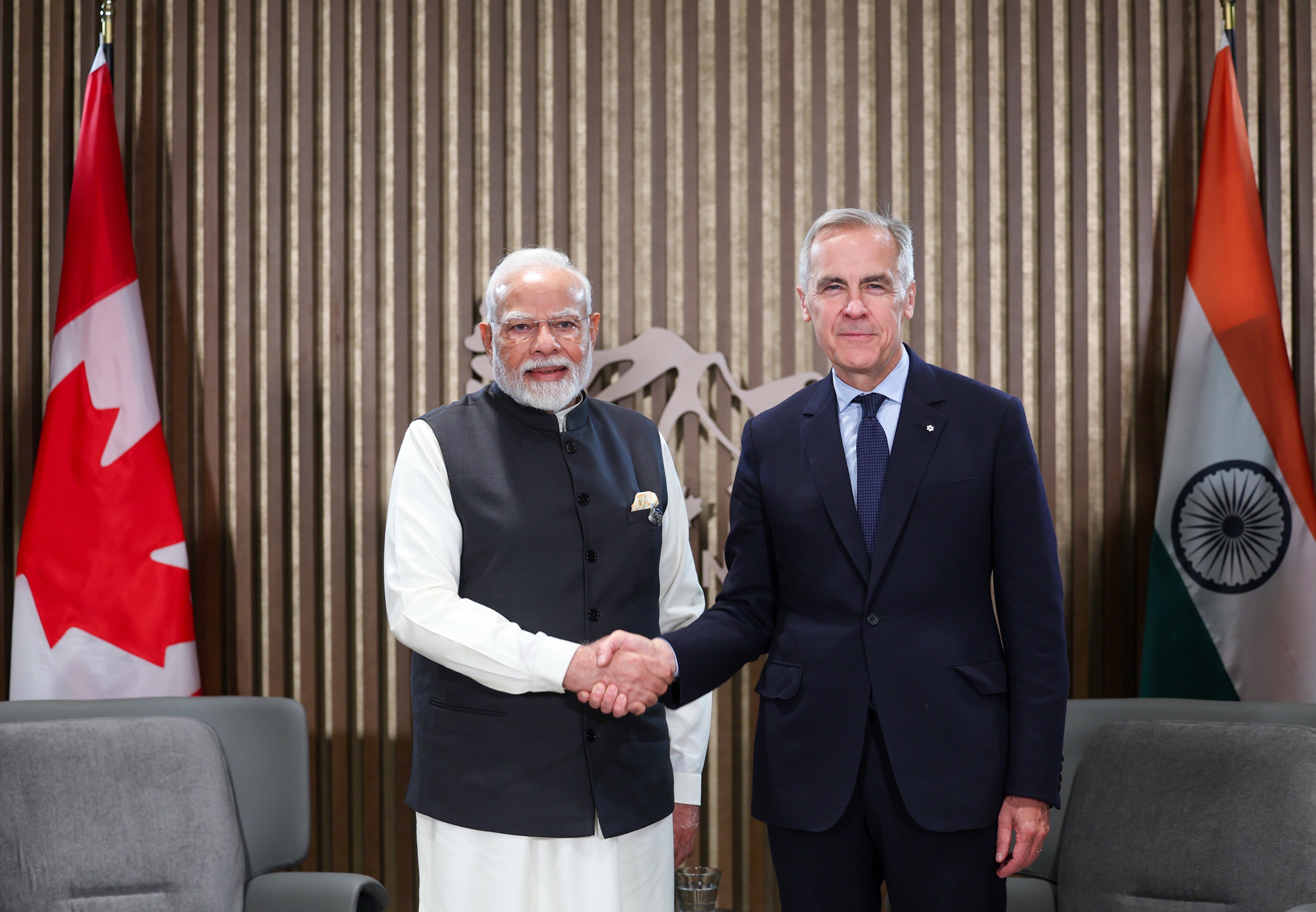
But it was toward the Indo-Pacific that Carney’s foreign economic policy cast its boldest ambitions. Recognising the rise of India not just as a market of 1.4 billion people, but as a counterweight to both Chinese dominance and American unpredictability, Carney championed the revival of the Canada–India Comprehensive Economic Partnership Agreement (CEPA) negotiations, which had stalled since 2017. In April 2025, Canada signed a preliminary framework with India focusing on clean technology, digital services, and critical minerals, signalling what Carney called “a partnership of shared democratic values and mutual economic urgency.” This initiative was praised by Z. Siewert as a “strategic breakthrough long overdue in Canadian diplomacy” (CCE, 2025).
Alongside India, Canada deepened its engagement with the CPTPP (Comprehensive and Progressive Agreement for Trans-Pacific Partnership)—a multilateral agreement involving nations such as Japan, Vietnam, Malaysia, Australia, and New Zealand. Unlike the United States, which withdrew from its precursor under Trump, Carney’s Canada embraced the pact fully, viewing it as a firewall against dependency on either China or America. New Canadian trade missions were dispatched to Tokyo, Seoul, and Kuala Lumpur, with a particular focus on green infrastructure investment and AI-enabled services (Pratap, 2025).
In the Caribbean and Latin America, the Carney government reignited relationships that had long been neglected. A series of new bilateral agreements and trade facilitation projects were launched with CARICOM nations, notably Barbados and Jamaica, centred around services, educational exchange, and climate finance. In South America, trade dialogue resumed with Brazil and Argentina, with a vision toward a pan-hemispheric framework not unlike the one proposed—then shelved—in the days of the Free Trade Area of the Americas (FTAA). “Carney appears to be reconstructing the Canadian trade world like a chessboard,” wrote analyst L. Macdonald in Análisis Plural (2024), “with each move placing Ottawa further from Washington’s shadow.”
Moreover, Carney’s economic worldview was deeply shaped by climate imperatives. He aligned trade diversification with Canada’s net-zero strategy, integrating environmental benchmarks into new trade agreements. The new Green Goods Corridor launched with the United Kingdom and the European Free Trade Association (EFTA) in late 2025 was not only a symbolic rebuke of fossil diplomacy, but a functional blueprint for carbon-neutral trade in industrial inputs and rare earth materials (Stanford, 2025).
Thus, what emerged under Carney was not a mere scattering of trade agreements, but a philosophy of engagement—one that placed Canada at the nexus of democratic, economically dynamic, and climate-conscious nations. “The Carney Doctrine,” as dubbed by journalist Eric Greenspon (Canadian Issues, 2024), reflected a broader historical lesson: that sovereignty, to be meaningful in a global age, must be as economic as it is political.
In charting this new course, Carney was not turning his back on the United States; rather, he was ensuring that Canada would no longer be caught flat-footed when Washington turned inward—or hostile. The world, he seemed to understand, would not wait. And so, Canada, guided by one of the most globally fluent leaders in its history, stepped boldly onto a broader stage.
This was not mere retribution. “Carney’s strategy is not about punishing the United States,” argued Pratap (2025), “but insulating Canada from the unpredictable tides of its southern neighbour.” Canada’s Indo-Pacific Strategy—once a vague talking point—became a cornerstone of the new trade agenda. A 2025 white paper by the Centre for Civic Engagement noted that “Canada’s pivot away from the U.S. has sparked an emerging multipolarity in North American trade” (Siewert, 2025).
Tariffs and the Cost of Economic Nationalism
Tariffs, traditionally a blunt tool of bygone empires, returned with theatrical flair under Trump. His administration levied a barrage of duties on Canadian imports—steel, aluminium, softwood lumber, and even dairy products became weapons in a tit-for-tat trade war that yielded little strategic gain.
The economic pain was real. A report from the McGill School of Public Policy noted that Canadian GDP growth dipped by 1.2% during the peak of the tariff conflict in 2020, and the manufacturing sector experienced over 15,000 job losses linked directly to U.S. trade aggression (Bitout, 2025).
But the damage did not fall solely north of the 49th parallel. American farmers, particularly in Wisconsin and Iowa, saw retaliatory Canadian tariffs crater their dairy exports. “In a bid to protect American sovereignty,” wrote Jantzi et al. (2025), “Trump managed to erode the very interdependence that once made both economies thrive.”
The Theatre of Trump: Diplomacy by Bombast
If Theodore Roosevelt advised speaking softly and carrying a big stick, Donald Trump shouted into the void and swung wildly. His foreign policy—especially with allies—was personal, erratic, and performative. One week, Canada was a “great partner,” the next it was “cheating us blind.” Analysts from the C.D. Howe Institute (Lilly, 2025) likened Trump’s approach to “diplomatic roulette.”
Unlike Nixon, who wielded unpredictability as a strategic tool, Trump seemed to genuinely confuse recklessness with strength. “He treated international relations like a ratings game,” observed A. Chan (2025), “and saw Canadian diplomacy not as a partnership, but as a reality show subplot.”
Who influenced Trump? The answer is murky. In economic matters, he leaned on a rotating cast of ideologues like Peter Navarro and Larry Kudlow. But in style and substance, it was Trump himself who governed—through instinct, resentment, and spectacle. As M. Mann (2025) put it, “He saw tariffs not as tools of strategy but as instruments of vengeance.”
The Future of Canada–U.S. Relations: From Brotherhood to Buffer Zones
The long romance between Canada and the United States has cooled into a wary cohabitation. Though CUSMA (formerly NAFTA) remains intact, the emotional architecture has fractured. A 2025 poll published in The Muslim World Report found that 41% of Canadians viewed the United States as “less trustworthy than China” (Lindsay, 2025).
Carney’s foreign policy, dubbed “Strategic Sovereignty,” aims not to sever ties with the U.S., but to render them optional rather than existential. “The next decade will define whether Canada remains America’s patient sibling,” Potter (2025) concluded, “or becomes an independent force within a global latticework of trade.”
And in a world roiled by climate crisis, technological upheaval, and resurgent nationalism, Carney’s bet may be the more prudent one. As Jim Stanford (2025) eloquently warned, “A sovereign economy must not hinge on the temperament of a single leader—or the tantrums of a neighbour.”
References
- Bitout, L. (2025). Canada-First: Assessing Canada’s Structural Vulnerability to US Trade Dependence. McGill eScholarship. PDF
- Pratap, A.D. (2025). Canada-US Trade Relations: Geography, Tariffs, and Strategic Diplomacy. SSRN. PDF
- Sutcliffe, J.B., & Anderson, W.P. (2019). The Canada-US Border in the 21st Century. Taylor & Francis.
- Brown, C.L. (2025). Economic White Paper Series. CDL Lawyers. PDF
- Siewert, Z. (2025). The Future of Canada-US Trade. Centre for Civic Engagement. PDF
- Potter, E.H. (2025). Canada–UK Relations in a Post-Atlantic World. The Round Table.
- Chan, A. (2025). You Had a Friend in Me: Canada’s Ontological Insecurity Under Trump. STAIR. PDF
- Mann, M. (2025). A Second Trump Presidency and What It Means for Canada. Social Contract Journal.
- Lindsay, A. (2025). Canadians View US Relations as Poor as Ties with Russia. Report
- Jantzi, J. et al. (2025). The Effect of Tariffs on Local and International Energy Trade. Alberta Law Review.
- Lilly, M. (2025). Verbatim: CUSMA Review Analysis. CD Howe Institute. PDF
- Macdonald, L. (2024). Canada and the Trump Presidency. Análisis Plural.
- Stanford, J. (2025). Building a Sovereign, Value-Added, and Sustainable Economy. Policy Alternatives.
- Greenspon, E. (2024). Nationalism and Continentalism. Canadian Issues.