


By Greg Scott
Boom, Bust, and Bailouts
Alberta’s political narrative has long leaned on a claim of being exploited by the federal government. From energy disputes to equalization formulas, many provincial leaders have painted Ottawa as an economic antagonist. But Alberta’s financial history tells a more complicated story — one defined by volatility, recurring support from the federal purse, and a paradox at the heart of its political identity: grievance in times of plenty, and dependence in times of hardship.
The 1930s Bailout: Alberta on the Brink
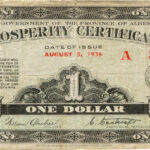
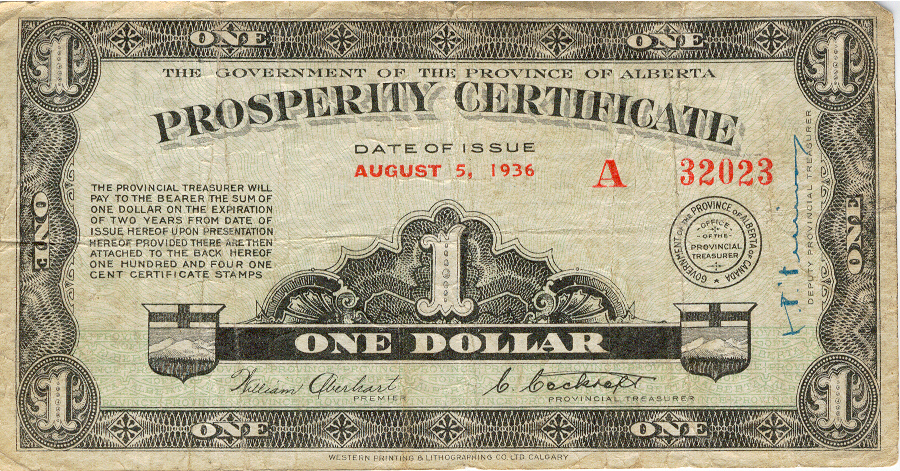
During the Great Depression, Alberta’s economy — heavily reliant on agriculture — collapsed. Wheat prices plummeted, drought ravaged the prairies, and provincial revenues dried up. By 1936, Alberta defaulted on its debt. The province, under the Social Credit government of William Aberhart, had declared a moratorium on debt repayments and attempted to institute a radical monetary policy. These moves prompted panic in financial circles and pushed Alberta into near isolation from capital markets.
It was the federal government under Prime Minister Mackenzie King that stepped in to prevent total collapse. Ottawa restructured Alberta’s debt and provided emergency funding to keep the province solvent. Without this intervention, Alberta may have defaulted in a way that permanently damaged its creditworthiness. Far from being penalized by Confederation, Alberta was rescued by it.
Boom Times and Budget Surpluses: The Oil Era
With the discovery of oil in Leduc in 1947, Alberta’s financial fortunes transformed. The post-war years ushered in an era of petroleum prosperity that helped the province emerge as one of Canada’s richest. By the 1970s and 1980s, Alberta was collecting billions in oil royalties, maintaining low taxes, and boasting debt-free budgets while other provinces struggled.
But here, Alberta’s selective memory often begins: this era of wealth is frequently invoked to justify provincial pride, while earlier federal support is forgotten. And even amid its boom, Alberta benefited from federal infrastructure, regulatory, and research support that helped grow the oil sands industry.
The Oil Price Collapse and Federal Aid (Again)
In the mid-1980s and again after 2014, the global price of oil plummeted, sending Alberta into deep recessions. Critics have long pointed to Ottawa’s 1980 National Energy Program (NEP) as a federal overreach that damaged Alberta’s energy sector. While the NEP remains a scar in provincial memory, the 2010s saw a different federal response.
Following the 2014 crash, Alberta received $251 million in stabilization payments from the federal government in 2016. While Alberta had lobbied for more, and the process stirred debate, the aid nonetheless contradicts the provincial claim that Ottawa “abandons” Alberta in downturns.
Furthermore, programs like Employment Insurance, infrastructure investments, pandemic relief funding, and national environmental subsidies have consistently flowed into Alberta — often at per capita rates higher than in provinces like Ontario or Quebec.
Equalization and the Grievance Narrative
Equalization has become the symbolic battleground for Alberta’s grievance politics. Premier Jason Kenney and later Premier Danielle Smith have criticized the program as “unfair,” suggesting Alberta pays into a federal pot only to see that money go east.
This ignores a fundamental fact: equalization is federally funded — not “paid” by provinces. Alberta’s residents contribute more in federal taxes because of higher incomes, not because of an injustice. Moreover, in other areas — such as health transfers, disaster relief, or employment insurance — Alberta has been a recipient as often as a contributor.
The Rise of Separatist Rhetoric: Danielle Smith and the Alberta Sovereignty Act
Premier Danielle Smith’s Alberta Sovereignty Within a United Canada Act, introduced in 2022, formalized a separatist-leaning posture without openly calling for independence. Framed as a defense of provincial jurisdiction, the Act has fueled sentiments that Alberta is chronically oppressed by federal overreach — despite the abundant evidence of federal support during hard times.
Smith has further stoked separatist rhetoric by entertaining the idea of an Alberta Pension Plan and policing autonomy, signaling that Alberta could “go it alone” if necessary. Yet such posturing clashes with economic reality: Alberta’s prosperity has always been deeply intertwined with Canada’s regulatory frameworks, fiscal transfers, and national stability.
Conclusion: A Selective Story of Victimhood
Alberta’s history is neither one of unrelenting victimhood nor of pure autonomy. It is the story of a province that has flourished in Confederation, endured hardship, and been rescued — multiple times — by the very federal institutions it now challenges. The myth of Alberta as a “cash cow” exploited by Ottawa glosses over key truths: when Alberta falters, Canada catches it.
Alberta’s leaders have every right to advocate for the province. But doing so honestly requires acknowledging the full arc of its financial history — including the federal lifelines that have kept it afloat. To claim separation while still leaning on the economic benefits of Confederation is not just contradictory — it’s hypocritical.
References:
- Emery, J. C. H., & Kneebone, R. D. (2011). Alberta’s Provincial Finances: Why the Short-Term Fixes Don’t Work. University of Calgary School of Public Policy.
- Courchene, T. J. (1998). Renegotiating Equalization: National Polity, Federal State, International Economy. Institute for Research on Public Policy. Link
- Richards, J. (2003). Alberta and the National Energy Program: A Retrospective. Fraser Institute.
- Crisan, D., & McKenzie, K. (2021). Have Albertans Already Been Paid Back for Past Fiscal Contributions? School of Public Policy Publications, 14(1). Link
- Government of Canada (2016). Federal Stabilization Payments to Alberta. Link
- McMillan, M. (2007). Alberta and Equalization: Separating Myth from Reality. Institute for Public Economics, University of Alberta.
- Smith, D. (2022). Speech introducing the Alberta Sovereignty Act. Legislative Assembly of Alberta Records.
- Tombe, T. (2022). Alberta’s Separatist Turn. The Walrus. Link
- Gordon, D. (2018). The Collapse of the Alberta Advantage. Canadian Political Science Review, 12(2), 1–15.
- Foster, J. (2010). The Petro-State Model: Alberta in Comparative Perspective. Studies in Political Economy, 86(1), 61–90.